Grid Bot Parameters Explained
Applies to: Traders, Algorithmic Trading Users, Advanced Users
This guide explains all the parameters available when configuring a Grid Trading Bot, helping you optimize your automated trading strategy.
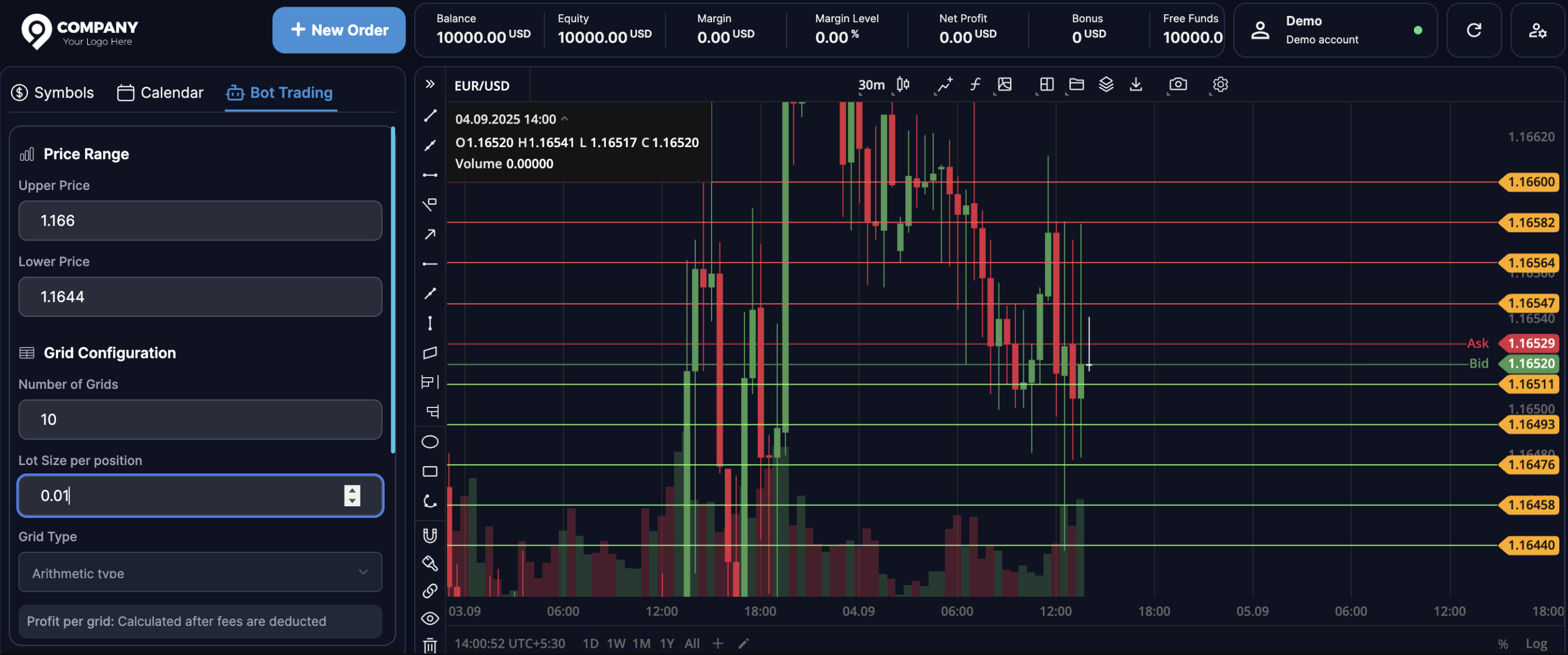
Price Range Parameters
Upper Price
- Purpose: Defines the top of the grid trading price range
- Function: The system stops executing orders when market price exceeds this level
- Setting: Based on technical analysis resistance levels
- Considerations: Set above expected price peaks but within realistic ranges
Lower Price
- Purpose: Defines the bottom of the grid trading price range
- Function: The system stops executing orders when market price falls below this level
- Setting: Based on technical analysis support levels
- Considerations: Set below expected price valleys but within safe margins
Grid Configuration
Number of Grids
- Purpose: Divides the price range into equal parts for order placement
- Function: More grids = more orders but requiring more investment
- Recommendation: 5-20 grids for most strategies, adjust based on volatility
Lot Size for Position
- Purpose: Determines trade size for each grid level execution
- Function: Fixed lot size for every buy/sell order in the grid
- Considerations:
- Account balance size
- Risk tolerance level
- Grid density (number of grids)
- Instrument volatility
Grid Type
Arithmetic Grid
- Calculation: Equal price difference between grid levels
- Formula:
Grid Spacing = (Upper Price - Lower Price) ÷ Number of Grids - Best For: Stable markets with consistent volatility
- Example: $10 price range, 10 grids = $1 spacing between orders
Geometric Grid
- Calculation: Equal price ratio difference between grid levels
- Formula: Uses percentage-based spacing between grids
- Best For: Volatile markets, cryptocurrencies, exponential moves
- Example: 2% price difference between each grid level
Investment Parameters
Investment Amount
- Purpose: Capital initiated for the grid trading strategy
- Function: Determines position sizing and grid density capability
- Calculation: Used with lot size and number of grids
- Important: Actual required amount may vary based on market conditions
Available Balance
- Display: Shows current available account balance
- Validation: System checks sufficient balance before activation
Minimum Investment
- Requirement: Minimum amount needed to start grid trading
- Variation: Depends on multiple factors:
- Number of grids selected
- Lot size configuration
- Instrument being traded
- Current market volatility
- Margin requirements
Advanced Parameters
Stop Loss Protection
- Emergency Stop: Overall strategy stop-loss mechanism
- Drawdown Limit: Maximum allowed loss before auto-deactivation
- Time-based: Maximum duration for strategy execution
Parameter Validation
Real-time Checks
- Balance Verification: Sufficient funds for selected configuration
- Price Validation: Logical upper/lower price relationship
- Grid Feasibility: Achievable grid spacing based on instrument
- Risk Assessment: Overall strategy risk evaluation
Optimization Tips
- Start with smaller grids for testing
- Use historical data for parameter optimization
- Consider market volatility when setting price ranges
- Adjust lot sizes based on account size and risk tolerance